Chuseok 2026: What to Do in Korea, Region by Region
Chuseok is the great autumn gathering in Korea: the festival of the full moon and the harvest, when the whole country heads home. In 2026, it falls on Friday, Sept. 25, in the middle of a long weekend running from Thursday the 24th to Sunday the 27th. For a visitor, it's a special time: Seoul empties out in part, neighborhood shops pull down their shutters, but the palaces, museums and traditional villages come alive with games, shows and workshops, often for free.
We've combed through everything planned for the occasion, from the capital's grand palaces to village festivals in Honam, and sorted it all out for you region by region. Before that, a few words to understand what's being celebrated, and what you need to know to avoid finding yourself in front of a closed shutter.
- Chuseok: Friday, Sept. 25, 2026. Public holidays: Thursday the 24th, Friday the 25th and Saturday the 26th; festivities run through Sunday the 27th. Monday the 28th is a normal working day.
- Seoul's four grand palaces, the Jongmyo shrine and the royal tombs are free from the 24th to the 27th.
- On Sept. 25, all national museums are closed: save this day for palaces, outdoor festivals and evening concerts.
- Convenience stores (CU, GS25, 7-Eleven, Emart24) stay open 24/7; many small restaurants close.
What is Chuseok?
Chuseok (추석, literally "autumn evening"), also called Hangawi (한가위, an old word evoking the "great middle of autumn"), is Korea's harvest festival. It falls on the 15th day of the 8th lunar month, that is, at the autumn full moon, which is why its date shifts each year on the Gregorian calendar. Along with Seollal, the Lunar New Year, it's one of the two great family holidays of the year. It's often compared to Thanksgiving: people give thanks to the earth and their ancestors for the harvest, and gather with family.
Its roots run deep. According to the chronicles of the Silla kingdom, it descends from gabae (가배), a month-long weaving contest between two teams that ended at the full moon of the eighth month. It also draws on ancient moon and harvest rites, when the first crops were offered to the gods and ancestors.
What Koreans do
- Head back to their hometown. Millions of people take to the roads or the trains to reunite with family: it's the biggest travel event of the year, and one of the reasons Seoul empties out.
- Honor their ancestors. On the morning of Chuseok, the family sets a table of dishes and fruit for the charye (차례), a rite of thanksgiving to the ancestors. In the days leading up to it, families tend the graves (beolcho) and pay their respects there (seongmyo).
- Food. The signature dish is songpyeon (송편), a small half-moon-shaped rice cake filled with sesame, chestnut or red bean paste and steamed over a bed of pine needles. It's served alongside jeon (savory pancakes), japchae, hangwa cookies and sikhye, the sweet rice drink.
- Play. Outdoor and board games (yutnori, tuho, jegichagi), Korean wrestling ssireum, farmers' music nongak and samulnori, and above all ganggangsullae (강강술래), a circle dance sung under the full moon, listed as UNESCO Intangible Cultural Heritage.
- Make a wish. Gazing at the full moon and confiding a wish to it is part of the ritual. In Korean folklore, people see a rabbit pounding rice to make tteok: you'll spot it on many posters this year.
Chuseok 2026: dates and practical tips
The dates. Chuseok falls on Friday, Sept. 25. Thursday the 24th (the eve), Friday the 25th and Saturday the 26th are public holidays; Sunday the 27th closes out the long weekend. Since a holiday falling on a Saturday doesn't come with a substitute day off, Monday the 28th is a regular working day. Expect roads and trains to be packed both on the way out (around the 23rd–24th) and on the way back (the 26th–27th).
What closes. Banks and government offices, a good portion of small restaurants and neighborhood shops (especially on the day itself), traditional markets, most department stores for a day or two, and all national museums on Sept. 25. Smaller museums and secondary attractions may also cut their hours or close.
What stays open. The palaces (free, see below), amusement parks like Everland and Lotte World, heavily touristed neighborhoods (Myeongdong, Hongdae, Gangnam), convenience stores open around the clock, and Seoul's subway and buses. If you're looking for a meal on the evening of the 25th, book ahead or have a backup plan at a convenience store.
Our advice. Take advantage of the quieter capital to do what you rarely can the rest of the year: stroll through the palaces without crowds, join a traditional festival without waiting an hour in line. And always check the schedule before heading out: several programs take place outdoors and may change in case of rain.
Seoul
The capital hosts the largest number of Chuseok programs, and nearly all of them are free. Here's how to fill your four days. For more, all this month's events are listed on our September calendar for Seoul.
Palaces, free from the 24th to the 27th
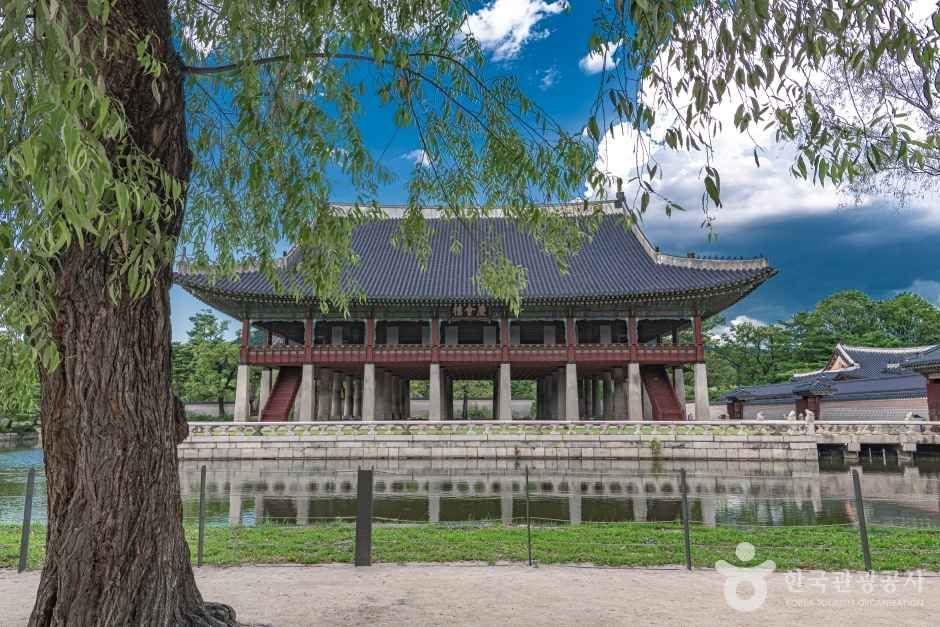
For four days, the Korea Heritage Service opens the four grand palaces, the Jongmyo shrine (usually accessible by reservation, here open for walk-in visits) and the royal tombs of the Joseon dynasty free of charge. Only the secret garden of Changdeokgung (Huwon) is not included. At Gyeongbokgung, don't miss the changing of the guard at 10 a.m. and 2 p.m., the guard post duty ceremony at 11 a.m. and 1 p.m., and the patrol at 3 p.m., no reservation needed.
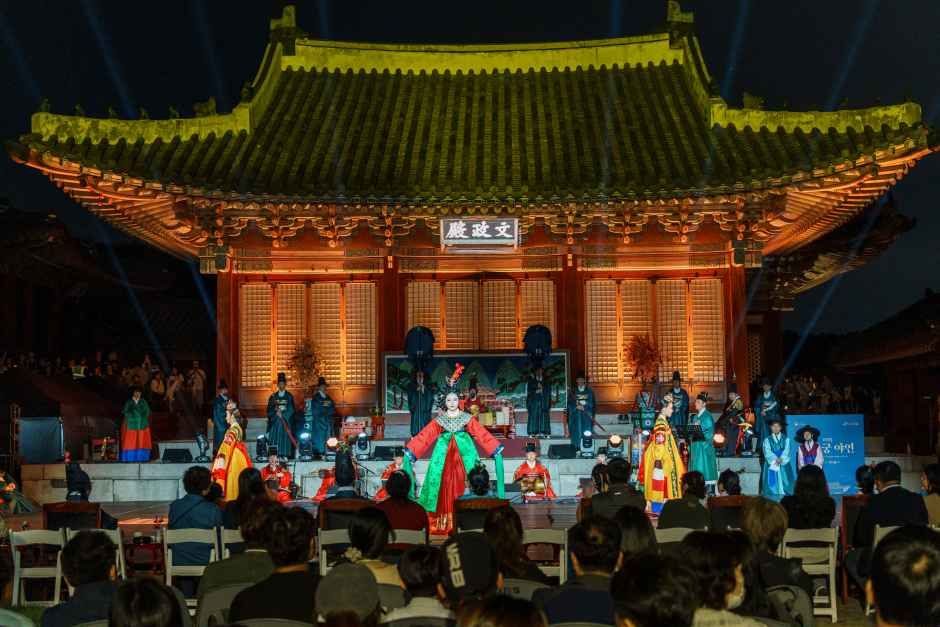
A court banquet that Crown Prince Hyomyeong once held for his father, King Sunjo, as a display of filial devotion, reenacted every evening in a version designed for families: visitors can wear a court costume, sample royal pastries and watch the performances. Free seats are also available for those who just want to watch the reenactment, on-site and subject to availability.
The big Chuseok festivals
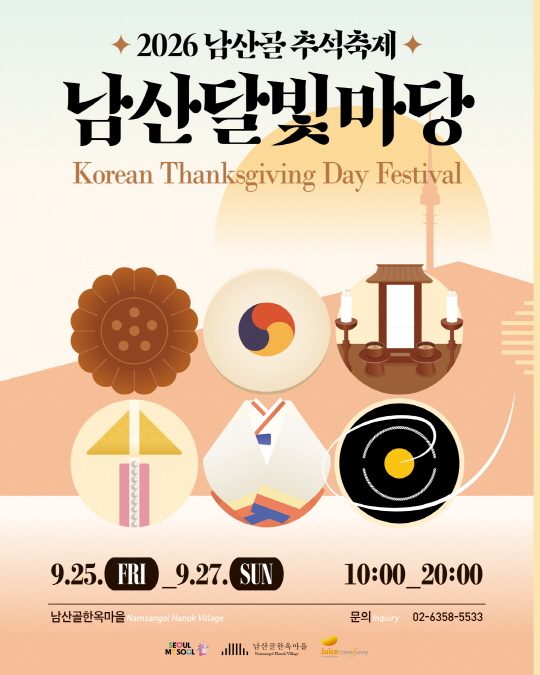
The capital's most "Chuseok" event. On the 25th at noon, learn about the charye table setting in a traditional house; the same day, a gugak busking performance under the pavilion (the first 100 spectators receive an LED lantern). On the 27th: tightrope walking (jultagi), Arirang, hanbok fitting, traditional hairstyling and craft demonstrations with master artisans. Throughout the three days, a food market (jujube cake, gangjeong, sikhye). The village also hosts the World Pansori Festival on the 25th and 26th, also free.
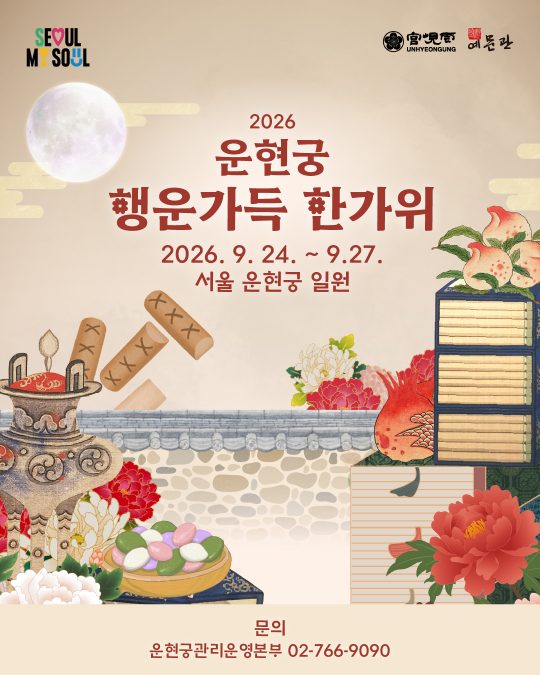
A small palace tucked in the heart of Jongno that comes alive for the holiday: traditional games, craft workshops, gugak, fusion music and Korean dance. On the 24th, wish calligraphy, a gugak performance and a ganggangsullae introduction.
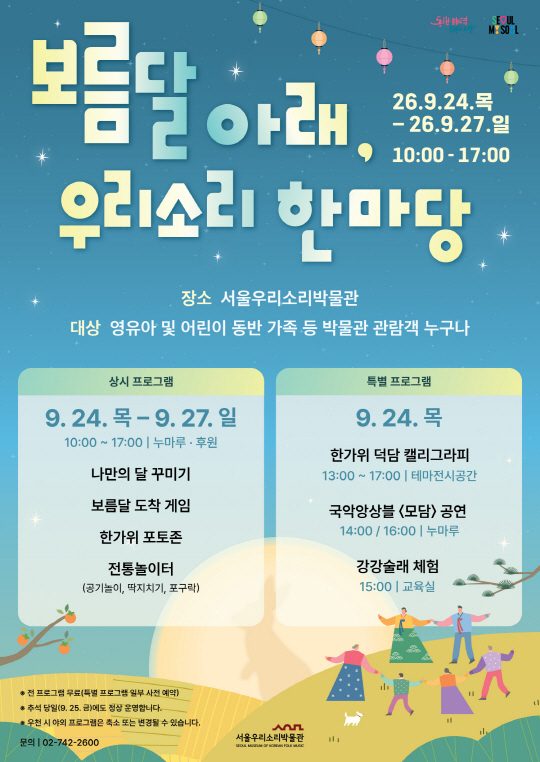
A "decorate your moon" workshop, a board game to reach the full moon, a photo corner, and children's games from days gone by. On the 24th, a gugak ensemble concert (2 p.m. and 4 p.m.), wish calligraphy and a ganggangsullae introduction (3 p.m.); some of these activities require registration.
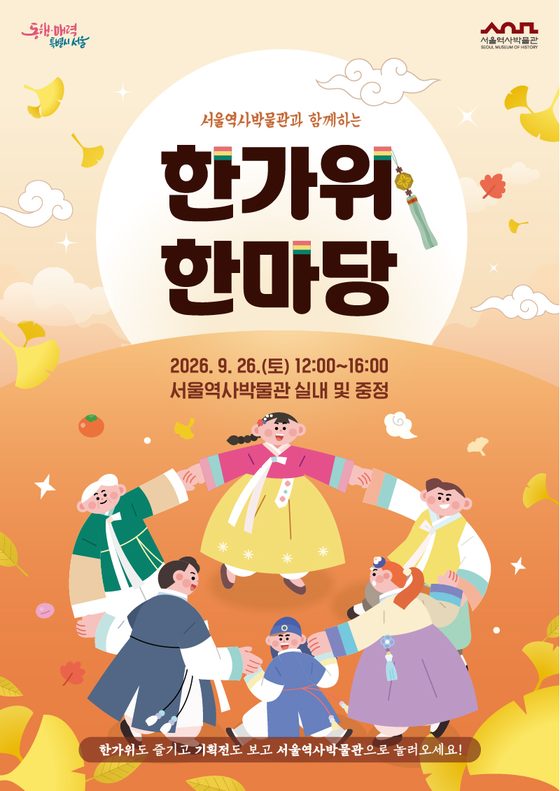
Fusion gugak busking (1:30 p.m. and 3 p.m.), rope-braiding games, hands-on farming tools, traditional games and workshops (folk painting, paper lanterns, knotted coasters).
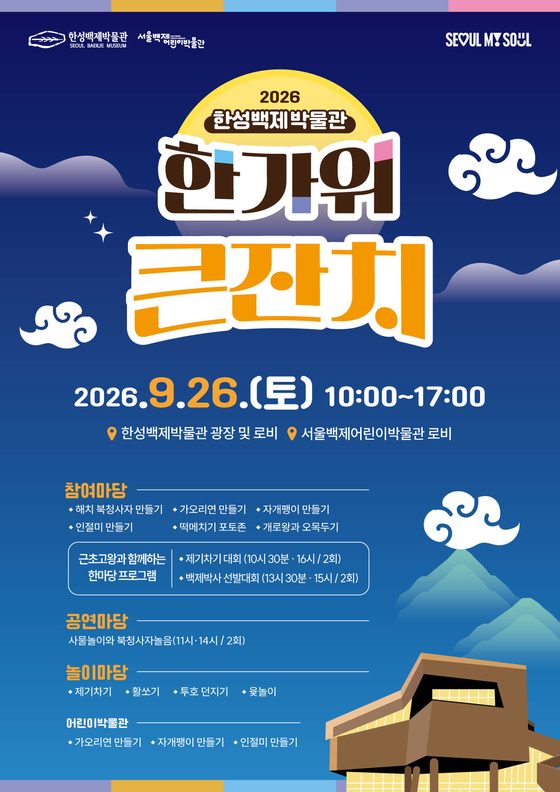
Samulnori and Bukcheong lion dance at 11 a.m. and 2 p.m., a gonggi (jackstones) tournament, a Baekje kingdom quiz, tuho, archery and yut, and workshops to choose from. On-site registration only: in the afternoon, the line starts forming around 12:30 p.m., so it's best to arrive early.
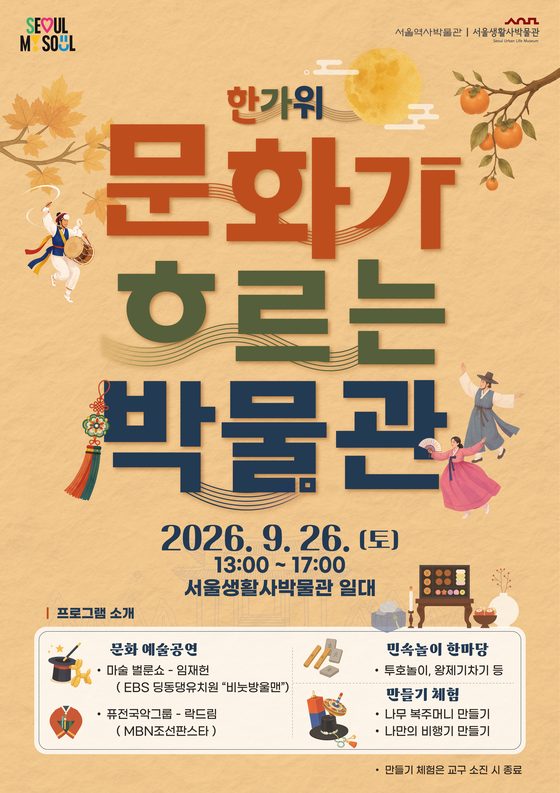
A magic balloon show and fusion gugak concert from 3 p.m. to 4:30 p.m., tuho, jegichagi, bisukchigi and workshops (lucky wooden pouch, paper airplane). Participation on-site, subject to material availability.
Traditional relay games, a ssireum wrestling introduction, workshops, performances and a ganggangsullae that the public can join. The Paju annex also opens its viewable storage and offers a storytelling show. Closed on the 25th.
Six ensembles take turns performing 50-minute sets on the forecourt: a gugak orchestra, samulnori, jazz fusion, vocal percussion, and then, on the 27th at 3 p.m., a concert blending pansori and world music. No show on the 25th, the museum's closing day.
Traditional music under the full moon
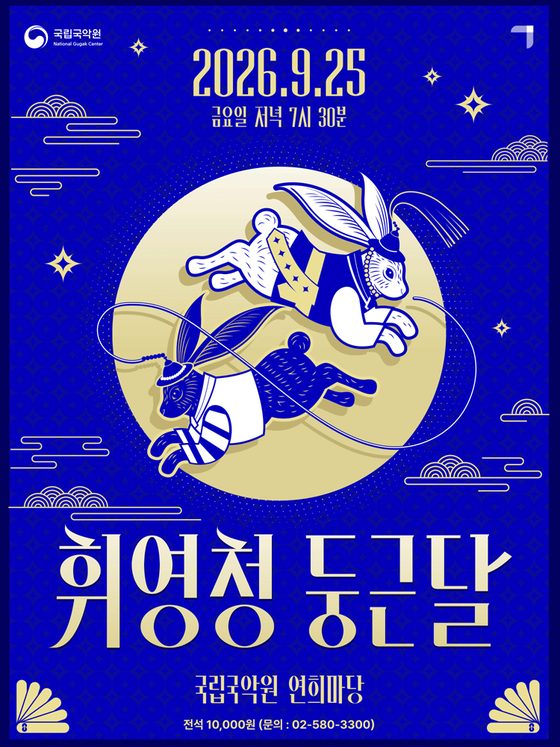
Tightrope walking, folk music, dance and percussion on the very evening of Chuseok. Before the show, ticket holders who chose the reservation-with-workshop option enjoy free activities (pounding tteok, making gochujang).
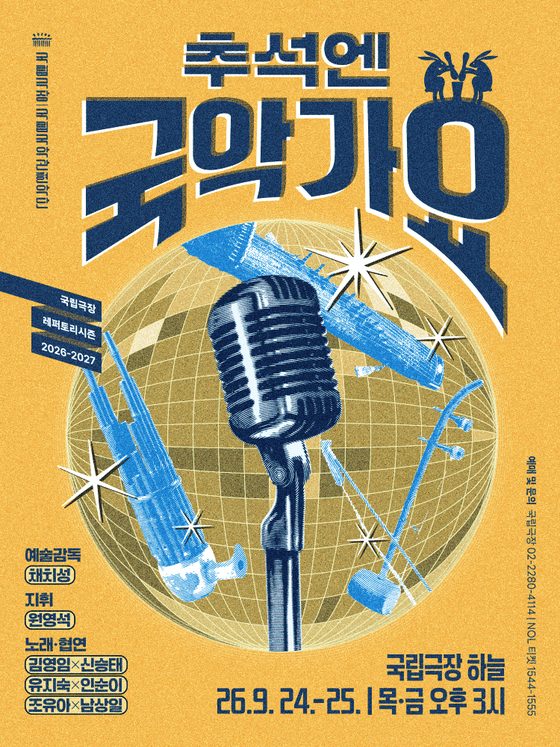
The National Orchestra of Traditional Korean Music accompanies great voices of popular song and folk, including Insooni, Kim Young-im and Shin Seung-tae.
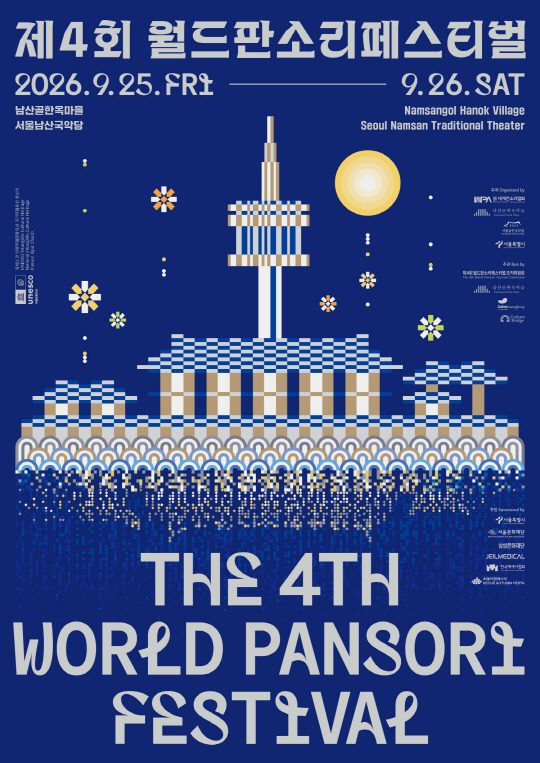
For its 4th edition, the festival bills itself as "a festival where no one is excluded from sori": recognized masters, young singers, children and foreigners share the same stage.
For K-pop fans
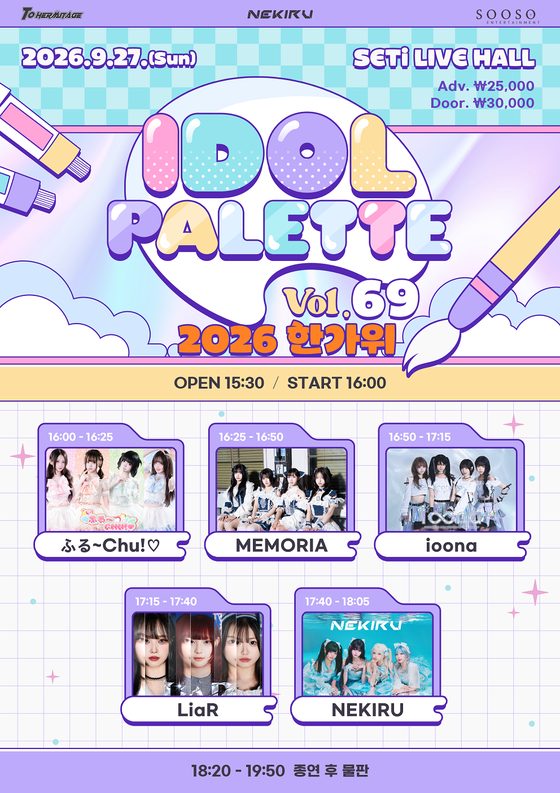
A lineup of emerging idol groups to close out the long weekend with music.
Gyeonggi and Incheon
An hour or two from Seoul, you'll find both the country's most famous folk village and a UNESCO-listed fortress that lights up for the occasion.
The Yongin folk-village museum reenacts Chuseok as it was celebrated in the past, house after house. On the day itself: a house-blessing rite (seongjugosa) led by a farmers' band, a ganggangsullae open to the public, songpyeon making (handed out in the afternoon while supplies last) and rice threshing. A bibimbap buffet is offered at lunch on the 25th and 26th.
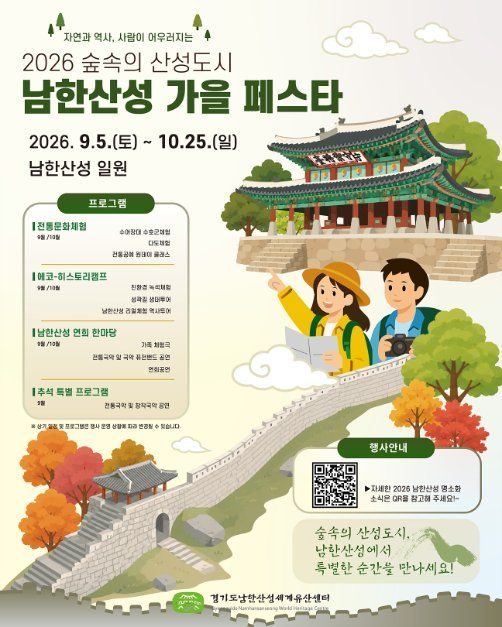
For Chuseok, the UNESCO-listed fortress lights up around its annex palace: a moonlit walk, nighttime illuminations and a concert. The rest of the "Fall Festa" (craft workshops, tea ceremony, fortress guard experience) continues until Oct. 25.
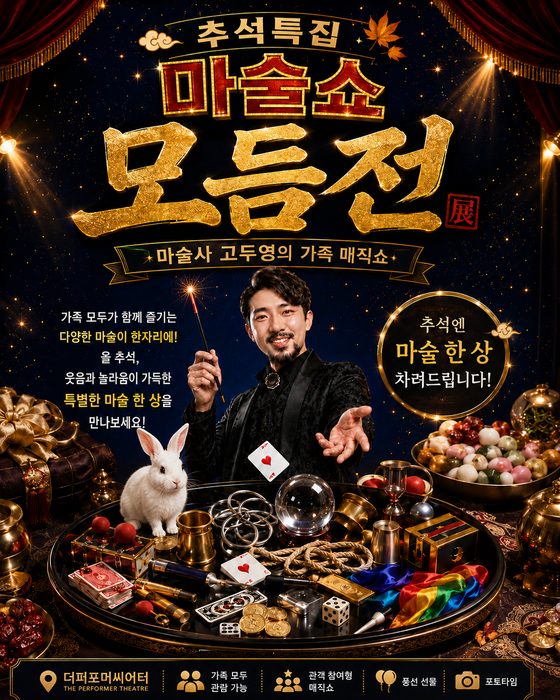
Magician Ko Du-young presents a family show whose title, "Modeum-jeon," plays on the assortment of jeon served at the Chuseok meal. Booking via Naver Booking.
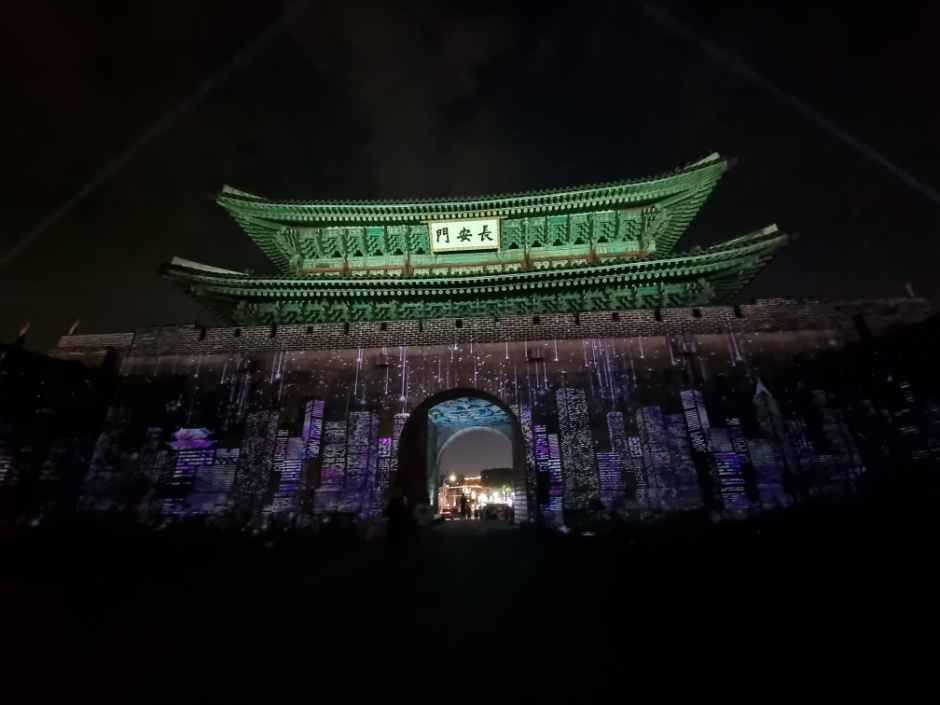
Every evening, the Hwaseomun Gate serves as a screen for a 35-minute light show (7:30 p.m., 8:30 p.m. and 9:30 p.m.), while Jangan Park lines up interactive installations and light displays. A lovely evening outing at the foot of a UNESCO-listed fortress.
Open-access traditional games (jegichagi, tuho, ring toss), a photo corner with traditional costumes, and, from 2 p.m. to 5 p.m., cooking workshops (Korean sweets on the 25th; gochujang making on the 26th). Workshops are limited to 150 people on the 25th and 130 on the 26th, with online registration possible (QR code on the poster), otherwise first come, first served.
Busan
The country's second-largest city keeps a fine traditional lineup, from Korean opera to small neighborhood museums.
A traditional opera (changgeuk) inspired by a painting designated a national treasure: friendship, love, conflict and reconciliation among four characters. 57 artists on stage; the show sold out when it premiered in Gwangju in June.
Quizzes tied to the current exhibition and a "full moon capsule" raffle (museum goodies) on the 25th and 26th starting at 10 a.m.; from the 24th to the 27th, traditional games (yut, jegichagi) in the courtyard. First come, first served.
A full-moon photo zone, open-access traditional games and a small promotion on wish bells: a good excuse for a ride above the bay.
Gyeongbuk: Andong, Yecheon and Gyeongju
Chuseok has its own flavor in North Gyeongsang, a land of Confucian villages and well-preserved traditions.
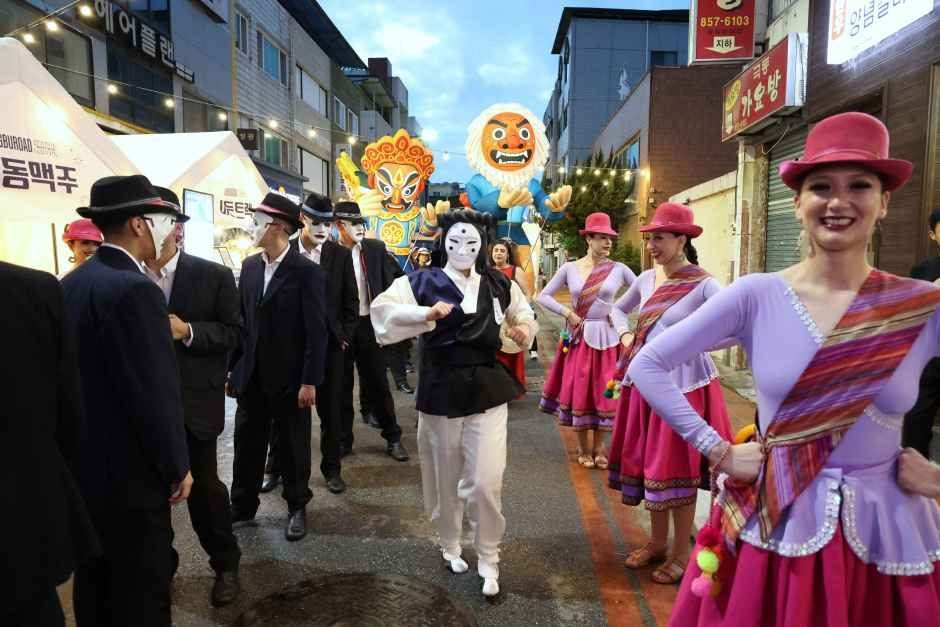
The country's biggest mask dance festival kicks off with the long weekend: 27 foreign troupes from 23 countries, 17 Korean traditional mask dance troupes (UNESCO-listed) and 10 theater troupes. The opening ceremony is held on the 25th, Chuseok day, at 7 p.m. at Andong Station, following a parade that departs at 6 p.m. This year's theme: "the memory of masks, a dance for all."
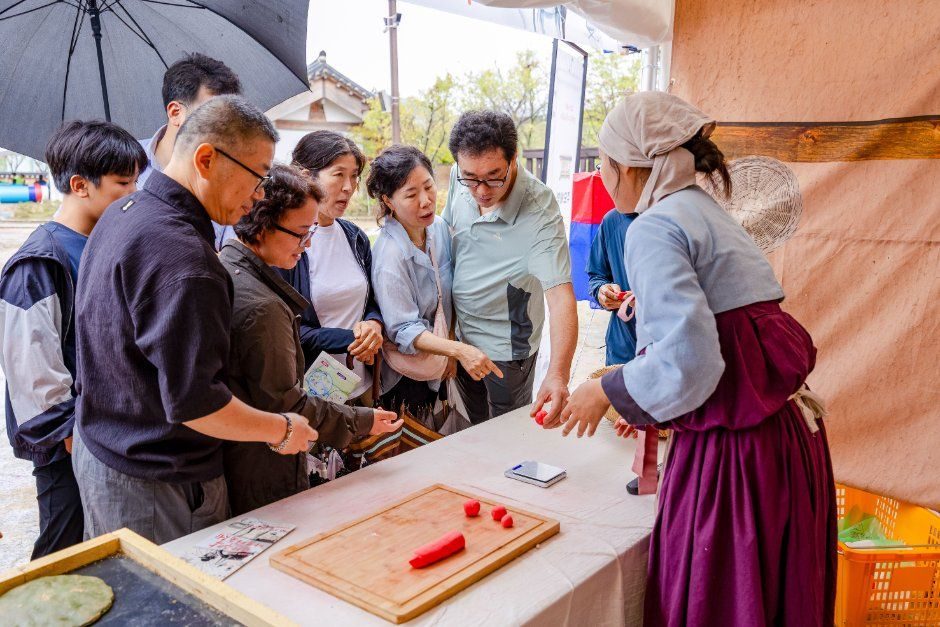
A festival designed for those returning to their hometown for Chuseok, centered on the country's last traditional tavern. On the program: a peddler's race, a stamp trail, dalgona making, archery, spinning wheel demonstrations, hanbok fitting, street concerts and a local products market.
Tteok pounding, yut, jegichagi, activities and games for three generations, in the botanical park next to Lake Bomun. For a cultural bonus, the Gyeongju National Museum offers, from Sept. 22 to 30, a family digital tour of its Wolji hall ("A Family Tour of Wolji"), closed on the 25th.
Honam: Jeonju, Jindo and village festivals
Honam, in the country's southwest, known for its cuisine and its love of traditional music, offers a more intimate Chuseok.
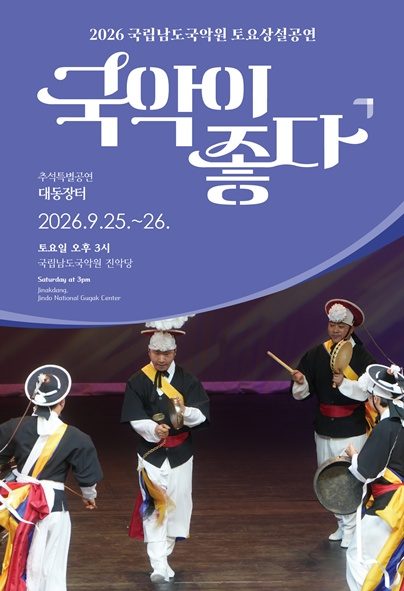
An outdoor theater piece (madanggeuk) that plunges into Jindo's old marketplace: vendors of remedies, yeot and puffed rice compete for the title of "god of commerce." Free reservation until the 24th at 5 p.m. (the center's website or 061-540-4042); traditional games from 1:30 p.m. to 3 p.m. in front of the hall.
Jeonju
The city of bibimbap and hanok is offering several free activities from the 24th to the 27th:
- Traditional games stamp trail in the hanok village (Sept. 26–27, 10 a.m.–6 p.m.).
- Hanji papermaking workshops at the Hanji Museum (Sept. 24 and 26, registration on the website).
- Hanji paper lanterns (moon and rabbit) at the Hanji Center (Sept. 24, 26 and 27).
- Hunt for the artisan's gold badge, part theater, part workshop, in the Omokdae garden (Sept. 24–27).
- Folk games at the Jeonju National Museum: yut, tuho, jegichagi, samulnori (Sept. 24, 26 and 27, closed on the 25th).
A genuine village festival, in its 24th edition, organized by the local youth association: a singing contest, activities and a sale of local products. Information is mostly in Korean; if in doubt, the township office can be reached at 061-390-6963.
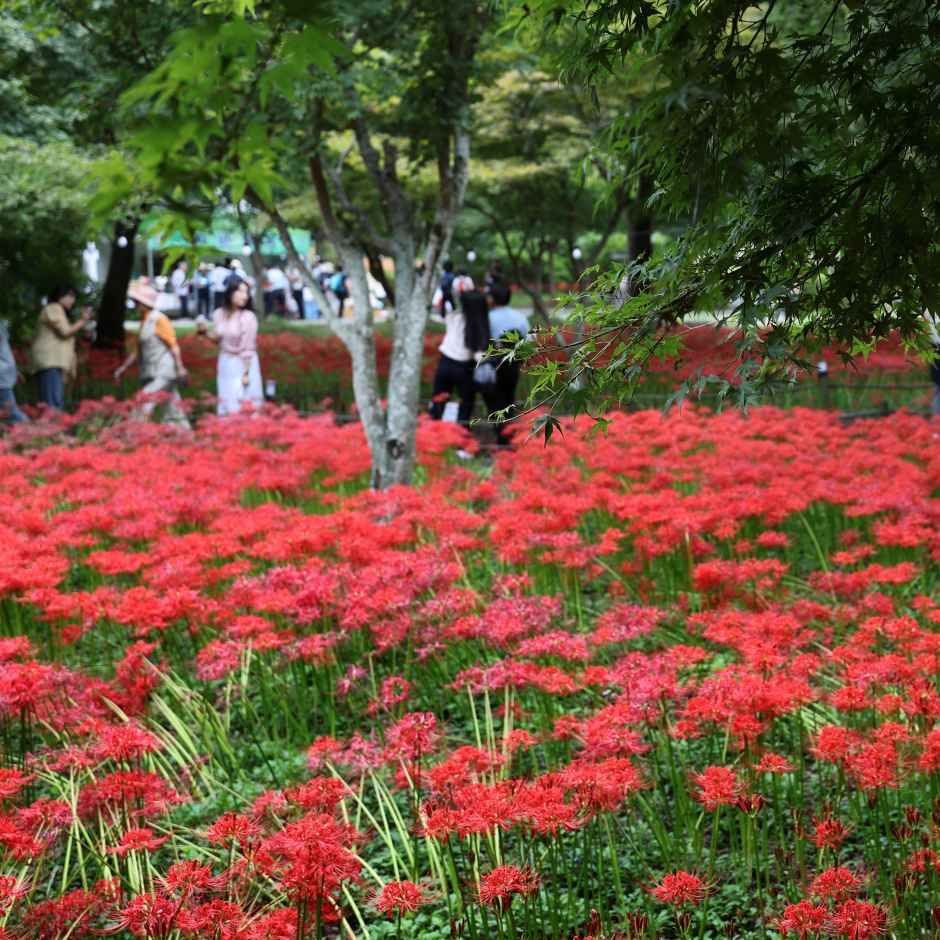
Last weekend to see the sangsahwa (red spider lilies) blanket the mountain in scarlet, with nighttime lighting extending the visit after sunset.
The region's national museums are also joining in: Iksan (wishes under the moon, giant yut), Naju (Chuseok folk games) and Gwangju (flowerpot workshop). Expect closures on the 25th at each of them.
Elsewhere in Korea
A few more ideas if you're traveling:
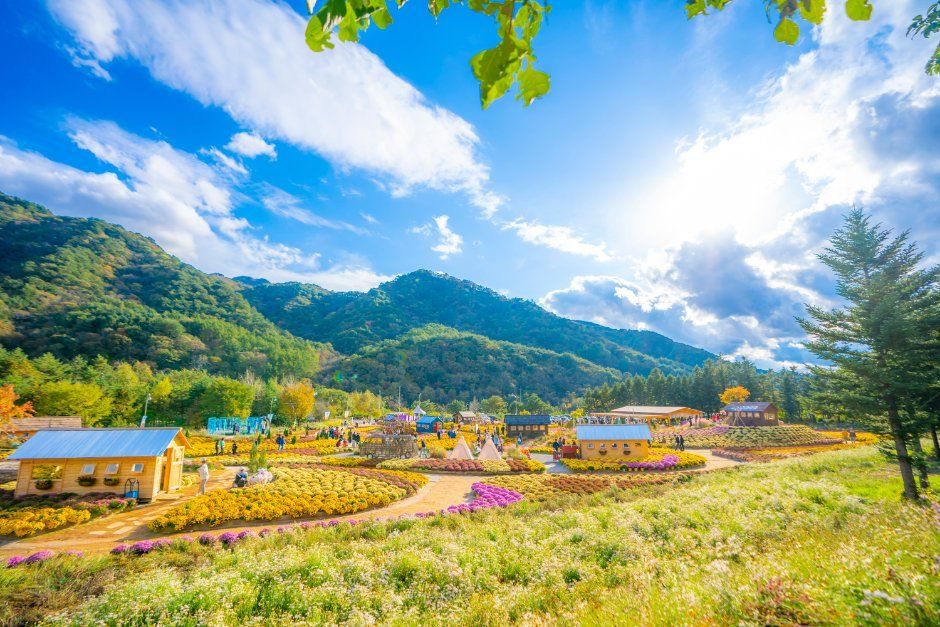
This edition celebrates the 100th anniversary of poet Park In-hwan's birth: autumn flower gardens, themed trails, a treehouse and a local products market, set in the mountains of Gangwon.
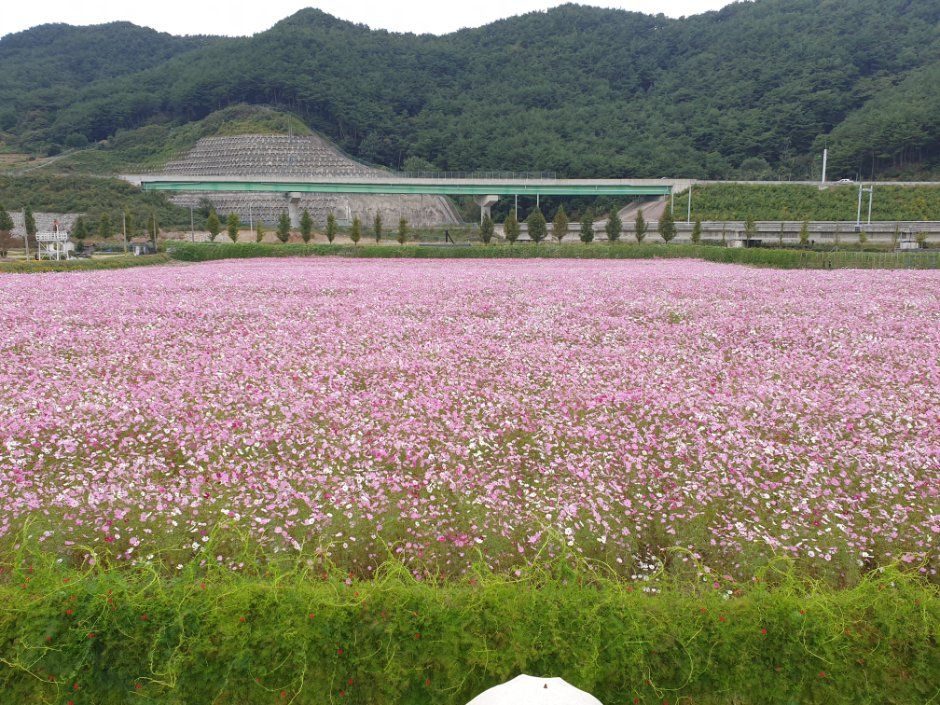
For its 20th edition, the fields of pink cosmos and white buckwheat host concerts, activities and a "special Chuseok" singing contest reserved for township residents.
- Chungcheong: Cheongju National Museum (Sept. 26–27, farmers' music, traditional theater, films for children) and Gongju National Museum (Sept. 26, nine masters and a Lego drum-making workshop).
- Gangwon: Chuncheon National Museum (Sept. 26, games, rice pounding and injeolmi tasting).
- Daegu: Daegu National Museum (Sept. 26–27, craft workshops and performances).
- Gyeongnam: Jinju National Museum and Gimhae National Museum (traditional games, with an Imjin War theme at Jinju).
- Jeju: Jeju National Museum (Sept. 24, 26 and 27, yut, tuho and jegichagi).
Making the most of Chuseok
- Arrive early at free festivals: hands-on workshops fill up fast, and some only take on-site registration.
- Book your tickets in advance if you're leaving Seoul: trains and flights to the provinces fill up as soon as sales open.
- Have a backup meal plan. In residential neighborhoods, many restaurants close; convenience stores will save the day.
- Check the schedule on each event's page before heading out: outdoor programs may change in case of rain.
- Don't be shy about joining in. A ganggangsullae, a game of tuho, or a badly folded songpyeon: that's how a festival is remembered.
And to make sure you don't miss anything else this month, find all the dates on the September calendar or explore Seoul's events. Happy Chuseok, or rather: 추석 잘 보내세요!
Posters and photos © organizers and cultural institutions (Seoul Metropolitan Government, Korea Heritage Service, KOPIS, Korea Tourism Organization…), reproduced for informational purposes. Information verified against official announcements as of Sept. 20, 2026; programs are subject to change.
Don't miss events like this one
Festival, exhibition, and concert alerts on X and Instagram.